- 92 302 252 4446
- info@hostingwala.pk
Trusted Website Hosting Agency in Pakistan

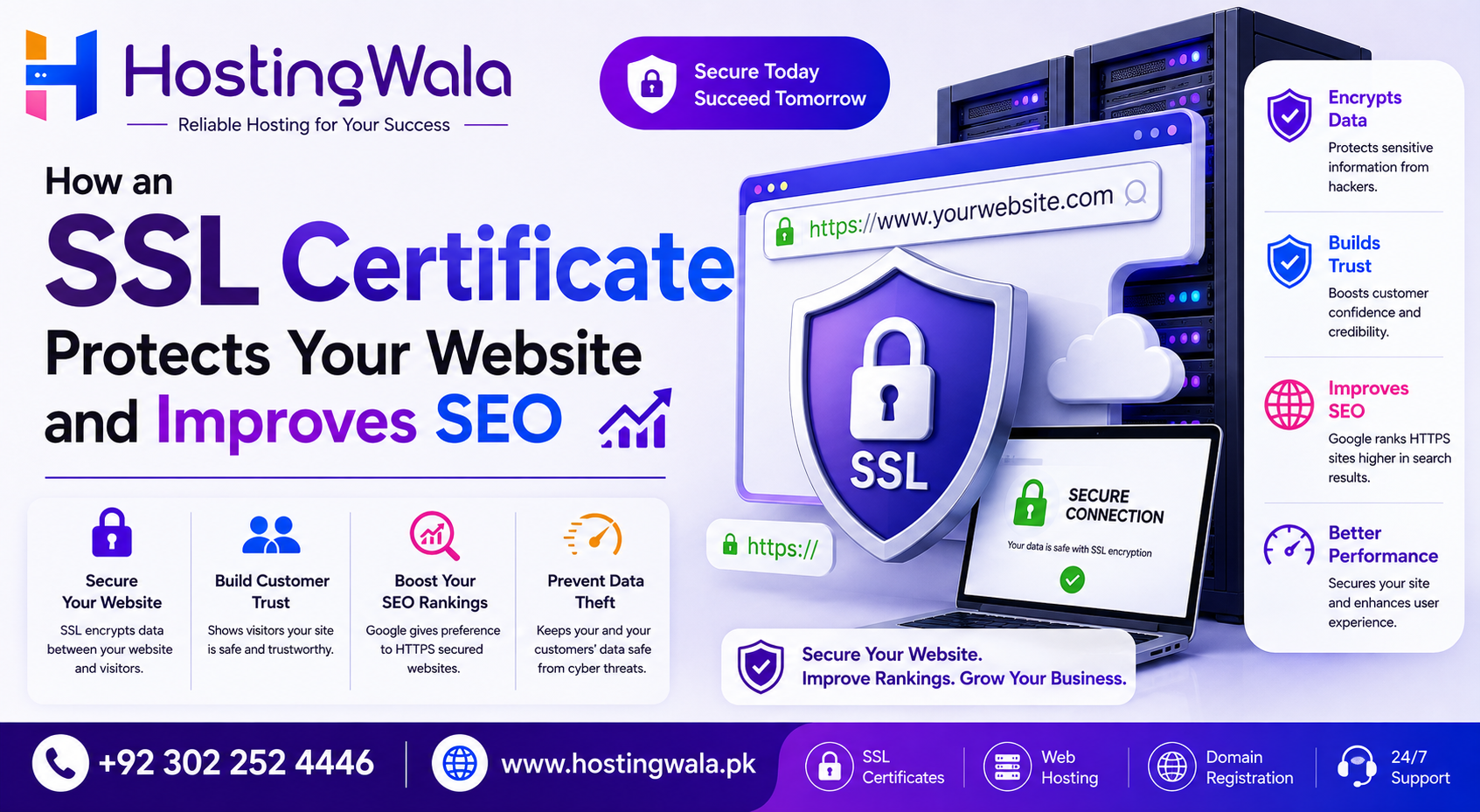
How an SSL Certificate Protects Your Website and Improves SEO
An SSL certificate encrypts the connection between your website and its visitors, helping protect sensitive information such as login details, contact forms, and online transactions. It also enables HTTPS, increases user trust, and supports better SEO by providing a more secure browsing experience. Every business website should use an SSL certificate in 2026.
Introduction
Website security is not just for big business any longer. Protecting the data of your visitors is a must, whether you have a personal blog, a company website, an online store or a business portfolio.
Installing an SSL certificate is one of the easiest and most effective ways to improve website security. SSL does not only secure your data but also increases customer trust and improves your website’s overall SEO performance.
Want to build a secure online presence? If you are about to create a new website or enhance an existing one, the first step is to understand the importance of SSL.
What Is an SSL Certificate?
An SSL (Secure Sockets Layer) certificate encrypts the information exchanged between a visitor’s browser and your website.
When SSL is installed, your website uses HTTPS instead of HTTP, showing visitors that the connection is secure.
SSL helps protect information such as:
- Login credentials
- Contact form submissions
- Customer information
- Payment details
- Personal data
Encryption makes it much more difficult for unauthorized parties to intercept this information.
Why Every Website Needs SSL
Protects Visitor Information
Visitors expect their personal information to remain private. SSL encrypts the connection so sensitive data is transmitted securely.
This is especially important for:
- Business websites
- E-commerce stores
- Membership websites
- Customer portals
- Online booking systems
Builds Customer Trust
Modern browsers display a secure padlock icon for HTTPS websites.
When visitors see this indicator, they feel more confident browsing your website, submitting forms, or making purchases.
A secure website creates a better first impression and strengthens your brand’s credibility.
Supports Better SEO
While high-quality content remains the biggest ranking factor, website security is also an important part of the overall user experience.
Google recommends HTTPS because it provides a safer browsing environment. Secure websites are more likely to earn user trust, reduce security warnings, and support long-term SEO efforts.
SSL should be viewed as part of a complete SEO strategy alongside fast loading speeds, mobile optimization, and valuable content.
Protects Your Business Reputation
If visitors receive browser warnings that your website is “Not Secure,” they may leave before exploring your products or services.
Installing an SSL certificate helps avoid these warnings and demonstrates that your business takes online security seriously.
Benefits of Using an SSL Certificate
| Benefit | Why It Matters |
| Encrypts website data | Protects sensitive information |
| Enables HTTPS | Creates a secure browsing experience |
| Builds customer trust | Encourages visitors to stay longer |
| Supports SEO | Contributes to a safer website experience |
| Removes “Not Secure” warnings | Improves user confidence |
| Protects your brand | Strengthens business credibility |
Common SSL Mistakes to Avoid
Many website owners install SSL but overlook important details.
Avoid these mistakes:
- Allowing the SSL certificate to expire.
- Mixing secure and non-secure content on the same page.
- Forgetting to redirect HTTP traffic to HTTPS.
- Ignoring browser security warnings.
- Delaying SSL installation for new websites.
Regular maintenance ensures your SSL certificate continues protecting your website.
Expert Tips
To maximize website security:
- Install SSL before launching your website.
- Redirect all pages to HTTPS.
- Renew your SSL certificate before it expires.
- Keep your CMS and plugins updated.
Combine SSL with reliable web hosting, regular backups, and website monitoring.
Security works best when multiple layers of protection are used together.
Frequently Asked Questions
What does an SSL certificate do?
An SSL certificate encrypts data exchanged between your website and visitors, making online communication more secure.
Is SSL necessary for every website?
Yes. Whether you operate a blog, business website, or online store, SSL helps protect user data and improves trust.
Does SSL improve SEO?
SSL is one of many factors that contribute to a secure and user-friendly website. Combined with quality content and technical optimization, it supports your overall SEO strategy.
What is the difference between HTTP and HTTPS?
HTTP transfers data without encryption, while HTTPS uses SSL encryption to secure communication between users and websites.
Can visitors see if my website uses SSL?
Yes. Most browsers display a padlock icon next to the website address, indicating that the connection is secure.
Conclusion
An SSL certificate is one of the simplest yet most important investments you can make for your website. It protects visitor information, builds customer trust, supports a secure browsing experience, and strengthens your website’s overall SEO foundation. Whether you’re running a personal website or managing an online business, HTTPS is no longer optional—it’s an essential part of creating a professional and trustworthy online presence in 2026.