- 92 302 252 4446
- info@hostingwala.pk
Trusted Website Hosting Agency in Pakistan

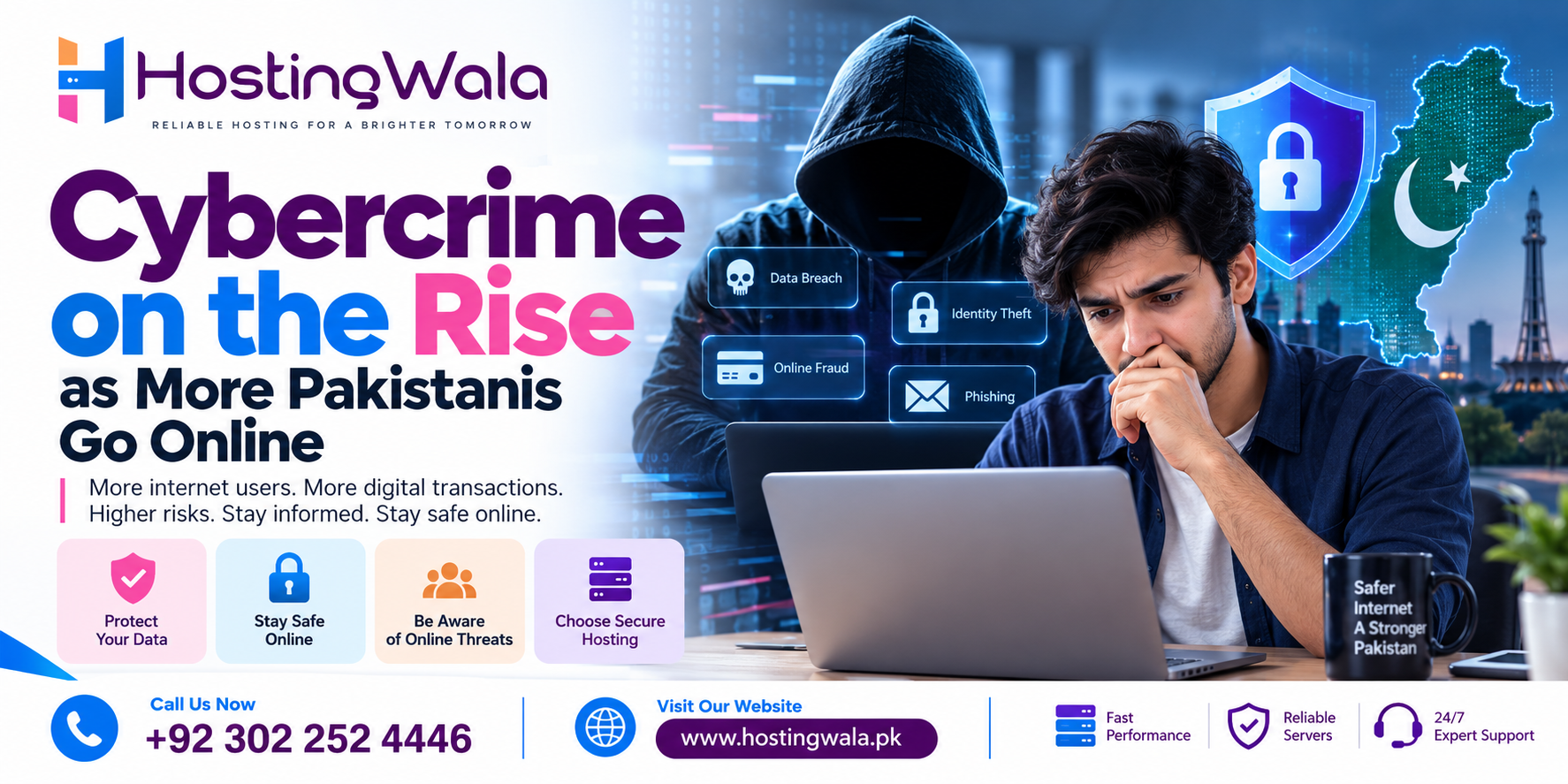
Cybercrime on the Rise as More Pakistanis Go Online
Cybercrime in Pakistan With more people using smartphones, online banking, social media, e-commerce platforms and other digital services, cybercrime is a growing concern in Pakistan. Common threats include hacking of accounts, financial scams, identity theft, phishing, malware and data breaches. Strong passwords, two-factor authentication, secure websites, regularly updating software and having reliable backups can help individuals and businesses reduce their risk.
Introduction
Fast growing digital ecosystem in Pakistan. The internet is used these days for shopping, banking, communication, education, work and business.
This digital expansion offers more opportunities but also more potential targets for cybercriminals. Concerns expressed in recent reports regarding online fraud, hacking and identity theft and vulnerability of digital security in Pakistan have come to the fore.
Basic cybersecurity knowledge is no longer optional for individuals and businesses.
Why Cyber Crime is Growing in Pakistan?
People are sharing more information and doing more financial transactions digitally as more services go online.
As more people in Pakistan get online, there are more accounts, websites, mobile applications, digital payments for criminals to try to target.
And it’s not just a matter of how many Internet users there are. Awareness of cybersecurity is also important since lack of it can make people susceptible to convincing messages, fake websites, malicious links and social engineering.
Common Types of Cybercrime
Some of the most common online threats include:
| Cyber Threat | What It Means |
| Phishing | Fake messages or websites designed to steal information |
| Account Hacking | Unauthorized access to online accounts |
| Online Fraud | Scams designed to obtain money or sensitive information |
| Identity Theft | Misuse of someone’s personal information |
| Malware | Harmful software that can damage or compromise devices |
| Data Breaches | Unauthorized exposure or theft of stored information |
Understanding these threats makes it easier to recognize suspicious activity before it causes serious damage.
Why Businesses Are Also in Danger
Cyber security is not just personal.
Businesses store customer data, payment information, employee accounts, emails, documents and other valuable information.
A hacked website or business email can damage customer confidence and lead to disruption of normal business processes.
Therefore, security should be considered from the start and not after an attack has been made, when dealing with websites.
How can businesses improve website security?
Businesses can implement a number of practical measures to enhance their security:
- Keep WordPress, plugins, themes and other software current.
- Make use of strong admin passwords.
- Use two-factor authentication where it’s available.
- Install and Maintain an SSL Certificate
- Choose a reliable hosting provider that has security features.
- Backup your website regularly.
- For administrators only.
- Look out for suspicious login activity.
- Disable unused plugins and accounts.
- Use security tools or firewalls, where applicable.
A reliable hosting environment can also help businesses with backup, server security, monitoring and recovery options.
How You Can Protect Yourself Online
There are also simple precautions users can take.
Do not give out passwords, OTPs, banking credentials or verification codes to anyone you did not initiate contact with.
Watch out for links sent via email, WhatsApp, SMS and social media. If the message instills a sense of urgency or offers a reward that sounds too good to be true, confirm the message through another source before taking action.
A further layer of protection is provided by using unique passwords and two-factor authentication for important accounts.
What to Do When a Cyber Incident Occurs
If an account or device is compromised, act quickly.
Change passwords that may have been compromised, secure email and financial accounts, disconnect compromised devices as needed, and preserve relevant evidence like suspicious messages or transaction records.
The National Cyber Crime Investigation Agency (NCCIA) is Pakistan’s dedicated cybercrime investigation agency. The PKCERT also provides a reporting avenue for cybersecurity incidents affecting organizations and systems.
FAQs
Why is cybercrime growing in Pakistan?
The growth in internet use, digital payments, social media and online services has created more opportunities for cyber criminals to exploit. Another risk factor is a lack of awareness of cybersecurity.
What are the most common types of cybercrimes?
Phishing, online fraud, account compromise, identity theft and other social-engineering attacks pose major threats to internet users.
What can I do to protect myself against scams online?
Use strong, unique passwords Enable two-factor authentication Avoid suspicious links Verify requests for money or personal information Keep your devices updated
Is the website at risk for cyber crime?
Yes. Websites can be attacked by compromised accounts, vulnerable software, malicious code, stolen credentials and other attacks.
Why do you need to backup your web site?
A recent backup can be helpful to a business to restore its website after some security incidents, technical failures or data loss.
Conclusions
Cybercrime is becoming more important in Pakistan as more people and businesses use digital services.
The answer isn’t avoiding the internet, but using it more securely. Good passwords, two-factor authentication, software updates, secure hosting, backups and knowing about cyber security can all help a lot to keep you safe online.
Website security should be considered an ongoing responsibility for businesses. Securing customer information and maintaining a safe online presence can help reduce risks and increase customer trust.